 +86 13315975815
 inquiry@htlcable.com
MICC
Introduction to Mineral Insulated Cables and Their Applications
Product Overview
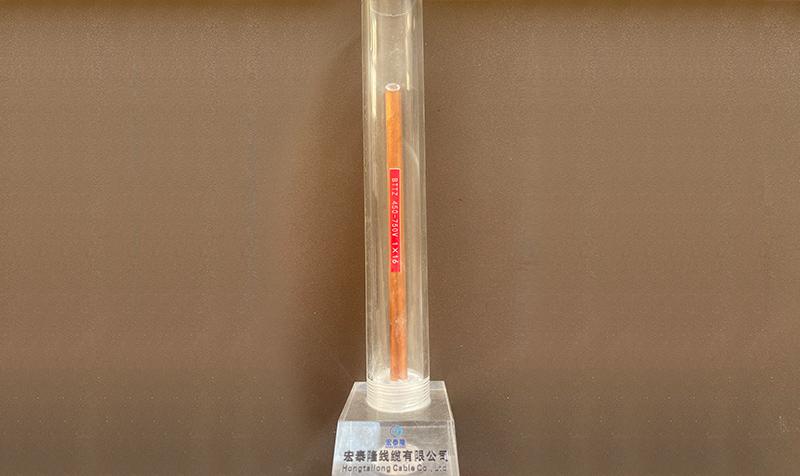
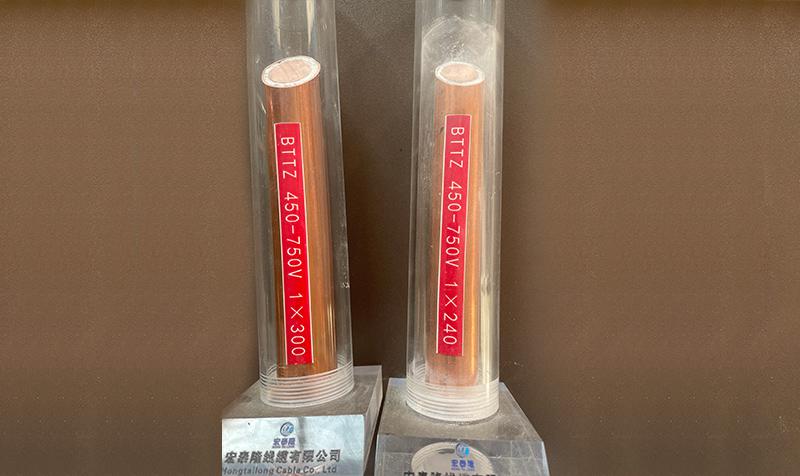
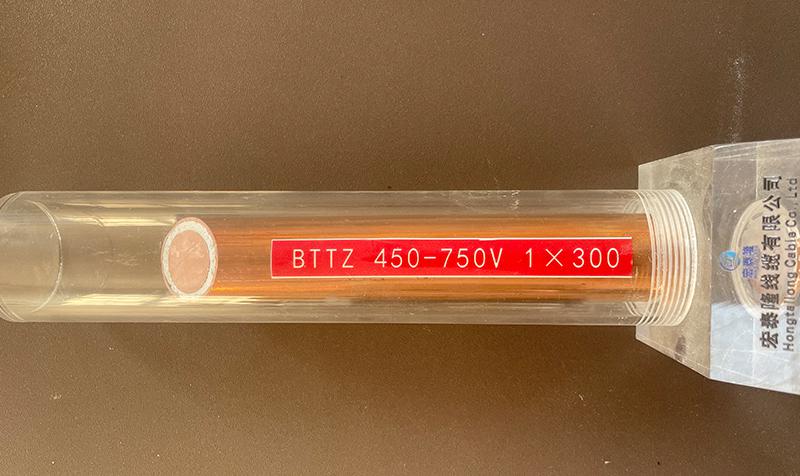
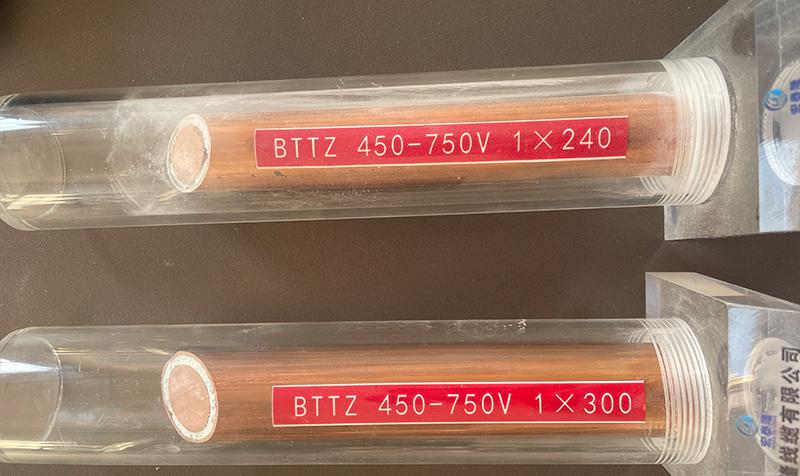
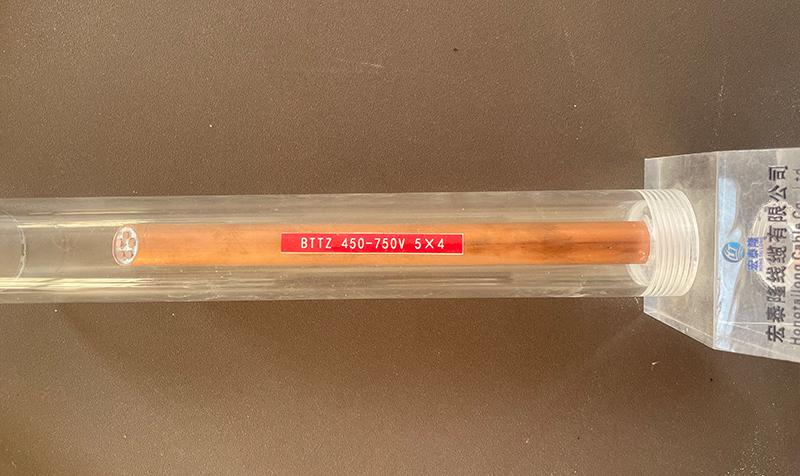
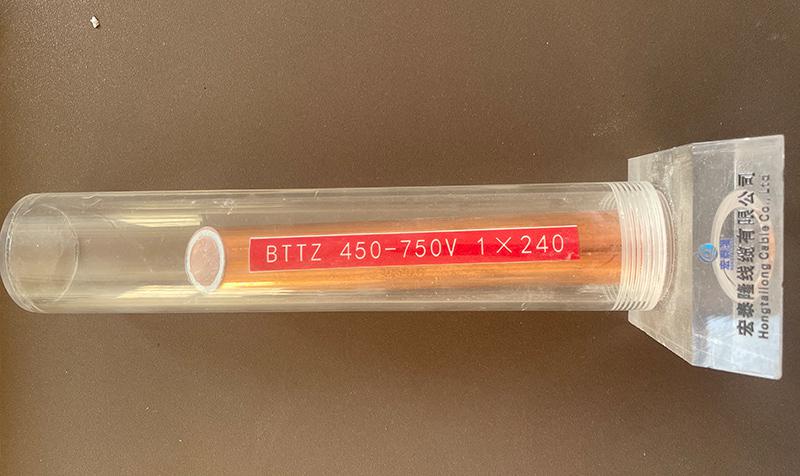
Mineral Insulated Cable (Mineral Insulated Cable), abbreviated as MI or MICC, is commonly referred to in China as magnesium oxide cable or fire-resistant cable, often designated as BTTZ when used for power distribution.
Composition of Mineral Insulated Cable
From inside to outside, a mineral insulated cable consists of:
· Copper conductor
· Inorganic mineral insulation material
· Copper sheathSpecifically, it uses oxygen-free copper as the conductor, electrical-grade magnesium oxide as the insulation, and a copper sheath as the outer protective layer. When required, an additional plastic outer jacket may be extruded over the copper sheath. For applications demanding low-smoke and halogen-free performance, a low-smoke zero-halogen (LSZH) outer sheath can be added.
Advantages of Materials Used
Since all components of this cable are made of inorganic materials, it offers several advantages not found in conventional cables:
· Fire resistance
· High current-carrying capacity
· Resistance to mechanical damage
· Halogen-free and non-toxic
· Explosion-proof
· Waterproof
· Corrosion-resistant
· Long service life
· Enhanced safety
· Overload tolerance
· High-temperature resistance
· Low cost
· Small bending radius
· Resistant to rodent and insect damage
· The copper sheath can serve as a protective earth conductor
Standard Product Designation and Identification
| Structural Feature | Voltage Rating | Model Code | Product Name | Number of Cores | Cross-Section (mm²) |
|---|---|---|---|---|---|
| Light Duty | 500 V | BTTQ | Light-duty copper conductor, copper-sheathed mineral insulated cable | 1, 2, 3, 4, 7 | 1–4 |
| BTTVQ | Light-duty copper conductor, copper-sheathed mineral insulated cable with PVC outer jacket | 1, 2, 3, 4, 7 | 1–4 | ||
| WD-BTTYQ | Light-duty copper conductor, copper-sheathed mineral insulated cable with LSZH outer jacket | 1, 2, 3, 4, 7 | 1–4 | ||
| Heavy Duty | 750 V | BTTZ | Heavy-duty copper conductor, copper-sheathed mineral insulated cable | 1, 2, 3, 4, 7, 10, 12, 19 | 1–400 |
| BTTVZ | Heavy-duty copper conductor, copper-sheathed mineral insulated cable with PVC outer jacket | 1, 2, 3, 4, 7, 10, 12, 19 | 1–400 | ||
| WD-BTTYZ | Heavy-duty copper conductor, copper-sheathed mineral insulated cable with LSZH outer jacket | 1, 2, 3, 4, 7, 10, 12, 19 | 1–400 |
Key Features
Fire Resistance
The cable is entirely composed of inorganic materials (copper and magnesium oxide powder), making it non-combustible and incapable of supporting combustion. With a copper melting point of 1083°C and magnesium oxide melting point of 2800°C, the cable can maintain circuit integrity even in fire conditions approaching copper’s melting point. It is the only cable certified to maintain power supply for up to 3 hours at 1000°C, while also withstanding fire hose streams and impact from falling debris.
High Current-Carrying Capacity
Magnesium oxide has a significantly higher thermal conductivity than mica or organic insulations, enabling better heat dissipation. Thus, for the same conductor cross-section, mineral insulated cables can carry more current than conventional cables.
Moreover, unlike organic-insulated fire-resistant cables—which require installation in metal conduits or enclosed cable trays per fire codes—mineral insulated cables can be directly surface-mounted, allowing for a higher ampacity derating factor. This often permits the use of one size smaller conductor (or even two sizes smaller in inaccessible areas) compared to organic-insulated alternatives.
Excellent Waterproof Performance
The seamless copper sheath acts as a complete moisture barrier, making the cable truly waterproof.
Explosion-Proof
The seamless copper sheath and densely compacted magnesium oxide prevent flammable gases, vapors, or flames from reaching connected electrical equipment, providing inherent explosion protection.
Corrosion Resistance
Copper exhibits good corrosion resistance under normal conditions and typically requires no additional protection. In highly corrosive environments, a simple plastic outer jacket suffices to enhance durability.
High-Temperature Resistance
The cable can operate continuously at 250°C and withstand short-term exposure near 1083°C without degradation of the magnesium oxide insulation. This makes it ideal for high-temperature industrial settings such as metallurgy and cement plants.
Mechanical Robustness
The combination of robust copper conductors, a tough copper sheath, and highly compressed magnesium oxide forms a dense, monolithic structure. This ensures the cable remains electrically intact even under severe mechanical stress—including bending, crushing, flattening, or twisting—without short circuits or performance loss.
Compact Installation
With a minimum bending radius of ≤6D (where D = cable diameter), the cable is easy to install and occupies minimal space. It is an excellent alternative to busways in confined areas.
Smoke-Free and Non-Toxic
Being entirely inorganic, the cable emits no smoke or toxic gases during a fire, making it genuinely safe and environmentally friendly.
Overload Tolerance
Thanks to the high thermal stability of magnesium oxide insulation, the cable can handle overloads exceeding 10 times its rated current without permanent damage. It also quickly recovers after overvoltage events.
Extremely Long Service Life
All materials are non-aging inorganic substances. Based on oxidation rates, a 0.25 mm copper sheath would take 257 years to corrode at 250°C. Given that standard sheath thicknesses range from 0.31 to 1.17 mm and operating temperatures are typically lower, the cable is effectively permanent in practical applications.
Copper Sheath as Ground Conductor
The continuous copper sheath has very low resistance and can function as a protective earth (PE) conductor, eliminating the need for a separate grounding wire.
Manufacturing Standards
· GB/T 13033-2007: Mineral insulated cables and terminations for voltages up to 750 V
· IEC 60702-2002: Mineral insulated cables and terminations for voltages not exceeding 750 V
· BS 6207-2001: Mineral insulated cables up to 750 V (UK)
Performance & Fire Safety Standards
· BS 6387:1994: Performance requirements for cables maintaining circuit integrity during fire (UK)
· GA 306.1~306.2-2001: Fire safety standards from China’s Ministry of Public Security
· IEC 60332-3 / GB/T 18380.1–.3-2001: Flame propagation tests for cables
· GB/T 17651.2-1998: Measurement of smoke density from burning cables
· GB/T 17650.2-1998: Test for corrosive and acid gas emissions
· GB/T 19216-2003 / IEC 60331: Fire resistance testing methods for electric cables
· UL 2196: Fire endurance test for cables (USA)
· IEC 60754-2: Determination of acidity and corrosivity of evolved gases
· IEC 60134-2: Smoke density test
Application Standards
· GB 50045-2005: Fire Protection Design Code for Tall Buildings
· GB 50016-2006: Code for Fire Protection Design of Buildings
· JGJ 16-2008: Electrical Design Code for Civil Buildings
· GB 50217-2007: Power Engineering Cable Design Code
· GB 50116-98: Code for Design of Fire Alarm Systems
· GB 50157-2003: Metro Design Code
· GB 50067-97: Fire Protection Design Code for Garages
· GB 50333-2002: Technical Code for Hospital Clean Operating Departments
· DBJ50-054-2006: Fire Protection Design Code for Large Commercial Buildings (Chongqing)
· DG/TJ08-2048-2008: Electrical Fire Protection Design Regulations for Civil Buildings
· GY 5067-2003: Fire Protection Design Code for Radio & TV Facilities
· BS 5345: Selection, installation, and maintenance of electrical installations in explosive atmospheres (UK)
· AS 2293: Fire detection and alarm systems in buildings (Australia)
· AS 3000: Wiring rules for fire-fighting equipment and elevators
· GB/T 16895.15-2002: Electrical installations in buildings – current-carrying capacity
· 09D101-6: Installation of Mineral Insulated Cables (National Construction Standard)
· 08ZD02: Central-South China Regional Standard Electrical Details
· BS 7671: Requirements for Electrical Installations (UK)
Note: Under GB 31247 (China) and EN 13501 (EU), Class A cables are tested per GB/T 14402-2007 and EN ISO 1716:2002, both equivalent to ISO 1716:2002. The classification criteria align with EU Aca-class cables. Therefore, Class A in GB 31247 is equivalent to EN 13501-6 Aca-class.
Typical Applications of Rigid Mineral Insulated Cables
Mineral insulated cables are widely used in:
· High-rise buildings
· Shopping malls
· Luxury hotels
· Hospitals
· Theaters, conference centers, libraries, museums
· Government offices, financial centers
· Broadcasting centers
· Sports arenas
· Industrial & mining facilities
· Airports, tunnels, subways, light rail systems
· Underground parking garages, civil defense shelters
· Ships, offshore oil platforms
· Petrochemical plants
· Aerospace facilities
· Steel & metallurgical plants
· Tobacco processing
· Military installations
Specific Use Cases by Sector:
1.
High-Rise Buildings:
General & emergency lighting, fire alarm systems, fire pump circuits, emergency elevators, computer room control wiring, main/sub-distribution feeders, dual-power control circuits.
Airport Terminals:
General & emergency lighting, fire detection & alarm systems, fire service circuits.
Subways, Light Rail, Tunnels:
General & emergency lighting, fire alarms, fire circuits, ventilation, and life-saving systems.
Shopping Malls, Hotels, Hospitals:
General & emergency lighting, emergency public address, elevators, fire circuits.
Conference Centers, Stadiums, Theaters:
General & emergency lighting, PA systems, elevators.
Libraries, Museums, Data Centers:
General & emergency lighting, fire alarm control, fire circuits.
Parking Garages, Underground Facilities, Civil Defense Shelters:
General & emergency lighting, fire alarms, fire circuits, ventilation.
Historic/Cultural Sites:
General & emergency lighting, fire alarms, fire circuits.
Petrochemical Plants & Offshore Platforms:
General & emergency lighting, high-temperature zones, fire circuits, high-power circuits, hazardous (explosive) area wiring.
Ships & Naval Vessels:
Generator room feeders, fire detection/alarm, smoke extraction & ventilation, galley power, high-power circuits, dual-power controls, emergency lighting & PA, computer room controls.
Steel & Metallurgy:
High-temp power & control circuits, emergency power, critical uninterrupted circuits, generator feeders.
Power Plants:
High-power circuits, general & emergency lighting, fire alarms, fire circuits.
Power Stations & Nuclear Facilities:
General & emergency lighting, computer room controls, high-power circuits, high-temp zones, hazardous areas.
Aerospace:
General & emergency lighting, computer room controls, high-power circuits, high-temp zones, hazardous areas.
Fuel Depots & Ammunition Stores:
General & emergency lighting, fire alarms, smoke extraction, ventilation in flammable/explosive areas.
Industrial & Mining:
Smoke exhaust fans, induction heating furnaces, high-temp zones, fire circuits, high-power circuits.